Introduction
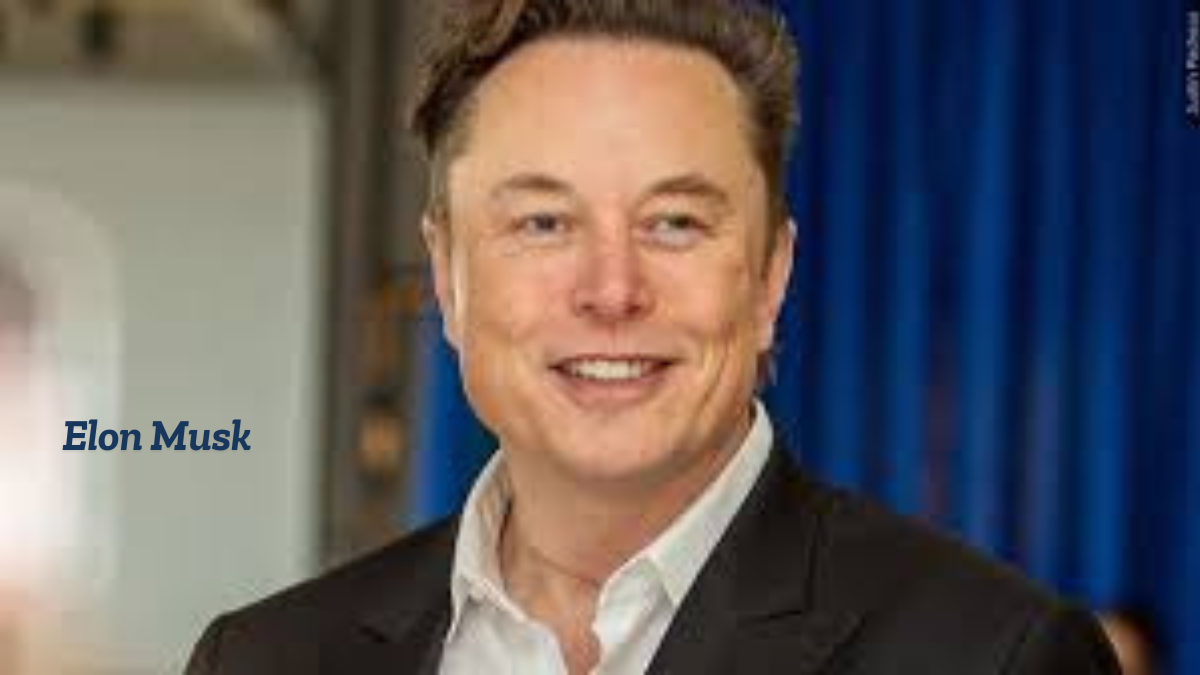
Elon Musk is one of the most influential and polarizing figures in the world of technology and innovation today. As the founder and CEO of companies like Tesla, SpaceX, and Neuralink, Musk is revolutionizing multiple industries, from electric vehicles to space travel, artificial intelligence, and even brain-machine interfaces. His ambition to push humanity towards a sustainable and multi-planetary future has made him a global icon. In this article, we’ll explore the life, achievements, and controversies surrounding Elon Musk, as well as his vision for the future.
Early Life and Education: A Glimpse Into His Ambitious Mind
Elon Musk was born on June 28, 1971, in Pretoria, South Africa. His early life showed a deep fascination with technology, business, and science. He developed an interest in computers and coding at a young age, teaching himself programming by the age of 12. In his teenage years, Musk was described as an avid reader, devouring books on science fiction, physics, and engineering.
Musk moved to Canada in 1989 to attend Queen’s University before transferring to the University of Pennsylvania in the U.S. There, he earned degrees in both economics and physics. His time in school laid the foundation for his entrepreneurial journey, providing him with the knowledge that would fuel his future ventures.
The Birth of PayPal: Musk’s First Big Venture
Elon Musk’s entrepreneurial journey began in the early 1990s. In 1995, Musk dropped out of a Ph.D. program at Stanford University after just two days, choosing to pursue business ventures instead. His first major success came with the creation of Zip2, a software company aimed at providing online business directories and maps for newspapers. Musk sold Zip2 to Compaq for nearly $300 million in 1999, giving him the capital to launch his next major venture.
Musk then co-founded X.com, an online payment company, in 1999. X.com later became PayPal after a merger with Confinity. PayPal revolutionized online payments, and in 2002, eBay acquired PayPal for $1.5 billion in stock. This sale made Musk a multimillionaire, and the success of PayPal provided the financial foundation for his future ventures.
SpaceX: Pushing the Boundaries of Space Exploration
In 2002, with the proceeds from the sale of PayPal, Musk founded SpaceX (Space Exploration Technologies Corp.), a company with the ambitious goal of reducing the cost of space travel and eventually enabling human colonization of Mars. Despite facing numerous setbacks and failures early on, including the loss of three rockets, Musk’s determination led SpaceX to achieve groundbreaking milestones in the aerospace industry.
SpaceX successfully launched its first privately-funded rocket to orbit, the Falcon 1, in 2008. The company’s achievements continued with the launch of the Falcon 9, the development of the Dragon spacecraft, and the creation of the Starship—a fully reusable spacecraft designed for deep-space missions.
One of SpaceX’s most significant accomplishments has been its partnership with NASA. In 2020, SpaceX became the first private company to send astronauts to the International Space Station, marking a historic moment in space exploration. The company continues to innovate with plans to develop a Mars-bound spacecraft and deploy the Starlink satellite internet system, aiming to provide high-speed internet to underserved areas around the world.
Tesla: Transforming the Electric Vehicle Industry
While SpaceX was pushing the boundaries of space exploration, Musk also turned his attention to Earth’s future. In 2004, Musk joined Tesla Motors (now simply Tesla), a company founded by Martin Eberhard and Marc Tarpenning, after investing in it and taking on a key leadership role. At the time, electric vehicles (EVs) were considered impractical for the mass market. However, Musk had a bold vision for changing that perception.
Under Musk’s leadership, Tesla developed high-performance electric cars that challenged the traditional automobile industry. The Tesla Roadster, launched in 2008, was the first production car to use lithium-ion battery cells and the first all-electric sports car with a range of over 200 miles.
Following this, Tesla released the Model S, a luxury sedan that gained widespread attention for its long-range capabilities, sleek design, and cutting-edge technology. Tesla’s Model 3, aimed at the mass market, became one of the best-selling electric cars in the world. The Model Y and Cybertruck followed, expanding Tesla’s vehicle lineup further.
Beyond vehicles, Musk’s vision for Tesla includes a future of sustainable energy. Tesla’s acquisition of SolarCity in 2016 allowed the company to enter the solar power industry, and Musk has consistently advocated for the use of renewable energy sources to reduce humanity’s reliance on fossil fuels.
Neuralink: Merging the Human Brain with AI
Musk’s ambitions don’t stop at space and electric cars. In 2016, he co-founded Neuralink, a neurotechnology company aimed at developing brain-machine interfaces. Neuralink’s long-term goal is to enable humans to merge with artificial intelligence, which Musk believes is essential for the survival of humanity in the age of rapidly advancing AI.
Neuralink is working on developing devices that can be implanted into the brain to treat neurological conditions such as paralysis and memory loss. Eventually, Musk envisions these brain-machine interfaces being used to enhance human cognition and capabilities, enabling people to communicate directly with machines and AI systems.
The Boring Company: Rethinking Urban Transportation
In addition to space, electric cars, and brain technology, Musk has also been exploring innovative solutions to improve urban infrastructure. In 2016, he founded The Boring Company, which seeks to alleviate traffic congestion through the construction of underground transportation tunnels. The company’s goal is to create high-speed transportation systems, such as the Loop, that use autonomous electric vehicles to travel at rapid speeds through tunnels.
While the company is still in its early stages, its projects in cities like Las Vegas and Los Angeles aim to demonstrate how tunneling technology can revolutionize public transportation and reduce traffic in overcrowded urban areas.
Controversies and Criticism
Despite his many successes, Elon Musk has faced significant controversies throughout his career. His outspoken nature on social media, particularly Twitter (now rebranded as X), has led to numerous public disputes and legal battles. Musk’s comments on topics like the COVID-19 pandemic, his management of Tesla, and his interactions with critics have often sparked backlash.
In addition, his management style has been criticized as demanding and unconventional, leading to concerns about employee satisfaction and workplace culture. Despite this, Musk’s companies have continued to perform well, and his supporters argue that his vision and leadership have brought about tremendous innovation.
Elon Musk’s Vision for the Future
At the heart of Musk’s work is a vision for humanity’s future. He has frequently spoken about his desire to make life multi-planetary, with a particular focus on Mars. Musk believes that establishing a human presence on Mars would serve as a safeguard for humanity in the event of a catastrophe on Earth. His vision also extends to creating a sustainable future on Earth, where renewable energy, electric transportation, and sustainable living are the norm.
Musk’s ventures continue to push the boundaries of possibility, and his influence on the tech industry is undeniable. He has inspired a generation of entrepreneurs, engineers, and innovators to think big and aim for seemingly impossible goals.
Conclusion
Elon Musk’s journey from a young, ambitious entrepreneur to one of the most powerful figures in technology has been nothing short of extraordinary. Through his work with Tesla, SpaceX, Neuralink, and more, Musk has reshaped industries, challenged conventional thinking, and pushed humanity toward a future powered by innovation. Despite the controversies that often surround him, there’s no denying that Musk’s relentless pursuit of technological advancement will continue to shape the world for years to come.
Leave a Reply