Introduction
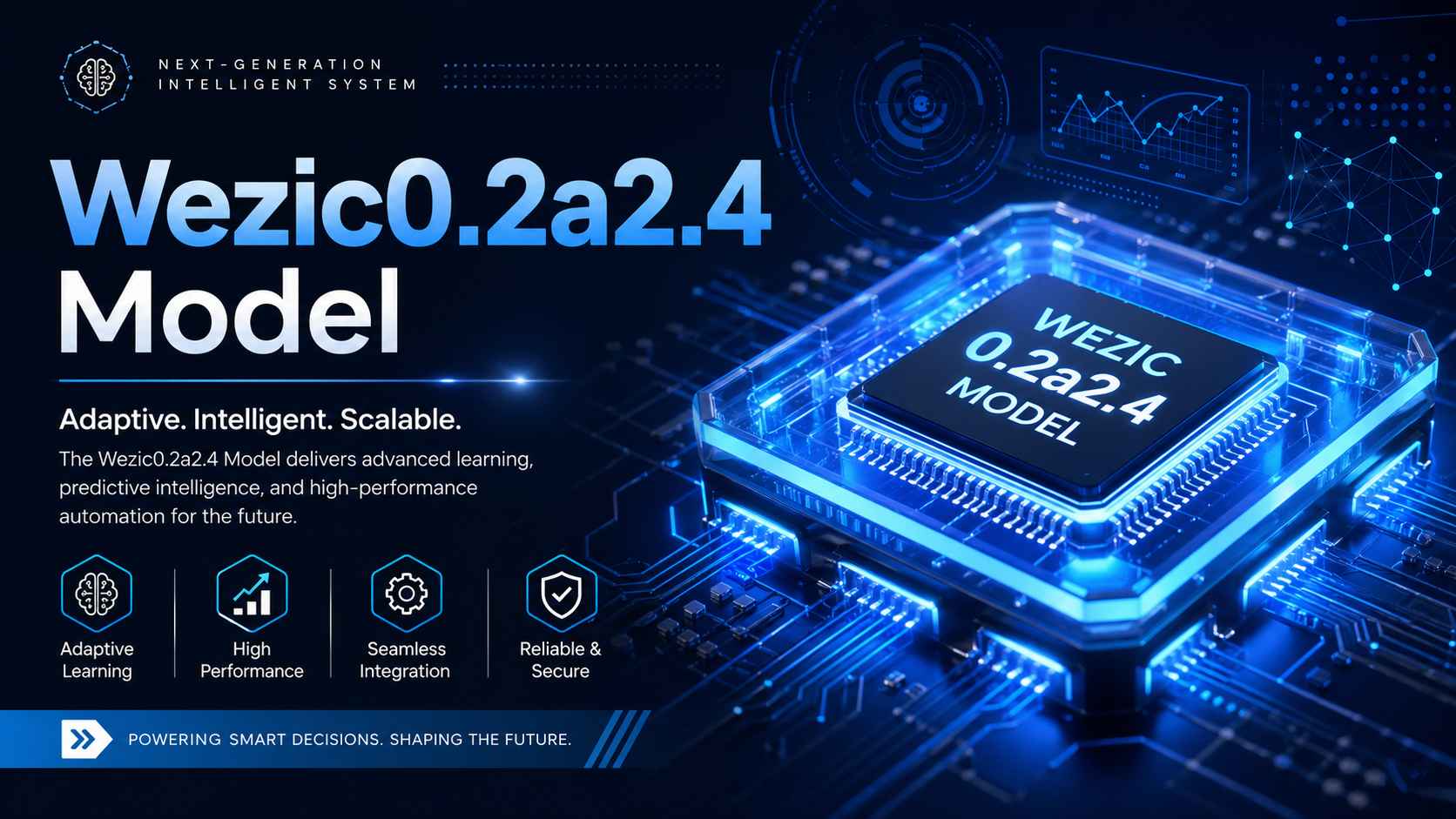
Technology evolves at a pace where yesterday’s innovation quickly becomes today’s standard. Among emerging intelligent systems, the Wezic0.2a2.4 Model has begun gaining attention for its advanced architecture, adaptive processing capabilities, and scalable performance.
Unlike conventional models designed for single-purpose automation, the Wezic0.2a2.4 Model represents a shift toward multi-functional intelligent frameworks capable of learning, optimizing, and adapting in real time.
This guide explains what the Wezic0.2a2.4 Model is, how it works, its practical applications, advantages, and why experts believe it could influence the next phase of AI-driven systems.
What Is the Wezic0.2a2.4 Model?
The Wezic0.2a2.4 Model is an advanced computational framework designed to combine data intelligence, predictive analysis, and adaptive learning mechanisms into a unified system.
At its core, the model focuses on three major principles:
- Dynamic Learning
- System Efficiency
- Scalable Integration
Rather than relying on fixed algorithms, it continuously improves performance by analyzing incoming datasets and optimizing outputs automatically.
This makes the model suitable for environments where data patterns constantly change, such as automation platforms, analytics engines, and intelligent decision systems.
Key Features of the Wezic0.2a2.4 Model
1. Adaptive Intelligence Engine
The model uses adaptive learning layers that refine performance over time. Instead of manual recalibration, it adjusts parameters based on usage behavior and feedback loops.
Benefits include:
- Faster decision making
- Reduced system downtime
- Improved prediction accuracy
2. Modular Architecture
One of the strongest advantages of the Wezic0.2a2.4 Model is its modular design. Organizations can integrate only the components they need without rebuilding entire infrastructures.
Modules typically support:
- Data processing
- Automation workflows
- Analytics integration
- Optimization tools
This flexibility makes deployment easier across industries.
3. High Processing Efficiency
Traditional systems often struggle with large datasets. The Wezic0.2a2.4 Model uses optimized computation layers that reduce processing load while maintaining performance quality.
Key efficiency improvements include:
- Lower resource consumption
- Faster response times
- Stable performance under heavy workloads
4. Predictive Decision Framework
Predictive modeling is another defining feature. The system analyzes historical and live data simultaneously to forecast outcomes and recommend optimized actions.
This capability allows businesses to move from reactive decisions to proactive strategy planning.
How the Wezic0.2a2.4 Model Works
The operational workflow of the Wezic0.2a2.4 Model follows a structured intelligence cycle:
Step 1: Data Collection
The model gathers structured and unstructured data from connected systems, sensors, or digital platforms.
Step 2: Pattern Recognition
Advanced analytical layers identify trends, anomalies, and behavioral patterns.
Step 3: Learning Optimization
Machine learning algorithms adjust internal parameters based on performance results.
Step 4: Output Generation
The system produces optimized decisions, predictions, or automated responses.
Step 5: Continuous Improvement
Feedback loops ensure the model evolves without manual intervention.
This closed learning cycle is what differentiates it from traditional automation tools
Real-World Applications
The Wezic0.2a2.4 Model can be applied across multiple sectors due to its scalable design.
Business Intelligence
Companies use the model to analyze customer behavior, market trends, and operational performance.
Healthcare Systems
Healthcare platforms can leverage predictive analytics to support diagnosis assistance and resource planning.
Financial Technology
Financial institutions benefit from fraud detection, risk evaluation, and investment forecasting powered by adaptive learning.
Smart Infrastructure
From logistics to smart cities, intelligent systems powered by the model help optimize traffic flow, energy usage, and operational efficiency.
Advantages Over Traditional Models
Many earlier computational systems relied on static rule sets. The Wezic0.2a2.4 Model introduces several improvements:
| Feature | Traditional Models | Wezic0.2a2.4 Model |
|---|---|---|
| Learning Ability | Limited | Continuous |
| Scalability | Complex | Modular |
| Efficiency | Resource Heavy | Optimized |
| Automation | Basic | Intelligent |
| Adaptability | Low | High |
These advantages make it attractive for organizations transitioning toward intelligent automation.
Why the Wezic0.2a2.4 Model Matters
Modern digital ecosystems demand systems that can evolve alongside growing data complexity. Static solutions no longer provide sustainable performance.
The Wezic0.2a2.4 Model addresses several modern challenges:
- Increasing data volume
- Real-time decision requirements
- Automation scalability
- Cost optimization
Experts believe that adaptive models like this represent the future of enterprise technology because they minimize manual management while maximizing intelligent output.
Challenges and Considerations
Despite its strengths, implementation requires planning.
Integration Complexity
Organizations must ensure compatibility with existing infrastructure.
Data Quality Dependency
Like all intelligent systems, performance depends heavily on the quality of input data.
Skilled Management
Proper configuration and monitoring by experienced teams enhance results significantly.
Understanding these factors helps organizations unlock the full potential of the model.
Best Practices for Implementation
To achieve optimal results when deploying the Wezic0.2a2.4 Model, experts recommend:
- Defining clear performance objectives
- Using clean and structured datasets
- Starting with pilot deployment
- Monitoring early performance metrics
- Scaling gradually across systems
These steps reduce risks while improving long-term efficiency.
Future Outlook of the Wezic0.2a2.4 Model
The next generation of intelligent technologies will likely focus on automation that learns independently. The Wezic0.2a2.4 Model aligns with this direction by combining learning adaptability with system scalability.
Future developments may include:
- Enhanced self-learning capabilities
- Deeper AI integrations
- Cross-platform intelligence synchronization
- Improved real-time analytics performance
As industries continue adopting data-driven strategies, models like Wezic0.2a2.4 are positioned to become foundational components of modern digital infrastructure.
FAQs About the Wezic0.2a2.4 Model
1. What is the Wezic0.2a2.4 Model used for?
The Wezic0.2a2.4 Model is used for intelligent data processing, automation, predictive analytics, and system optimization across industries such as business intelligence, finance, healthcare, and smart infrastructure management.
2. How does the Wezic0.2a2.4 Model work?
It works by collecting data, analyzing patterns, optimizing performance through adaptive learning, and generating automated decisions while continuously improving through feedback-based learning mechanisms.
3. What makes the Wezic0.2a2.4 Model different from traditional systems?
Unlike traditional static models, the Wezic0.2a2.4 Model learns dynamically, adapts to changing data environments, improves accuracy over time, and supports scalable modular integration.
4. Is the Wezic0.2a2.4 Model suitable for businesses?
Yes, businesses can use the model to enhance operational efficiency, automate workflows, predict trends, and make data-driven strategic decisions with improved accuracy and reduced manual effort.
5. Does the Wezic0.2a2.4 Model require technical expertise to implement?
Basic implementation may require technical expertise, especially during integration and configuration, but once deployed, the model operates largely through automated learning and optimization processes.
6. What industries benefit most from the Wezic0.2a2.4 Model?
Industries such as finance, healthcare, logistics, technology, marketing analytics, and smart city infrastructure benefit significantly due to the model’s predictive intelligence and automation capabilities.
7. What is the future potential of the Wezic0.2a2.4 Model?
The model is expected to play a major role in next-generation AI systems, enabling smarter automation, real-time decision-making, scalable intelligence platforms, and advanced digital transformation strategies.
Conclusion
The Wezic0.2a2.4 Model represents more than just another technological upgrade—it signals a transition toward intelligent, self-optimizing systems. With adaptive learning, efficient architecture, and wide industry applicability, it provides organizations with the tools needed to operate smarter and faster in a data-driven world.
Businesses seeking scalability, automation, and predictive intelligence should closely watch the evolution of the Wezic0.2a2.4 Model as it continues shaping the future of advanced computational systems.